
For a brief moment in 2021, Rhodium became one of the hottest assets on the planet. The little-known precious metal surged to nearly $30,000 per ounce, climbing far above Gold and, at times, becoming more expensive than luxury watches, high-end sports cars and even some cryptocurrencies on a per-ounce basis.
And yet, most people had never even heard of it. That is what makes Rhodium so fascinating.
Unlike Gold, Rhodium is not sitting in central bank vaults or being snapped up by retail investors during periods of market panic. In reality, it lives in a far smaller and more specialised corner of the global economy.
But that tiny market is precisely what makes it capable of breathtaking price swings.
The rare metal hiding in plain sight
Rhodium is a Silver white precious metal that belongs to the Platinum group metals family, alongside Platinum and Palladium.
It is incredibly resistant to heat and corrosion, highly reflective and remarkably durable, qualities that make it extremely useful in industry.
Most people never see Rhodium directly, but many interact with it every single day without realising. That is because its most important role is inside catalytic converters, the emissions systems fitted to petrol-powered cars.
In simple terms, Rhodium helps clean toxic gases coming out of vehicle exhausts, particularly nitrogen oxides, one of the major pollutants linked to air quality problems in large cities. When it comes to breaking down those harmful emissions, Rhodium is exceptionally effective.
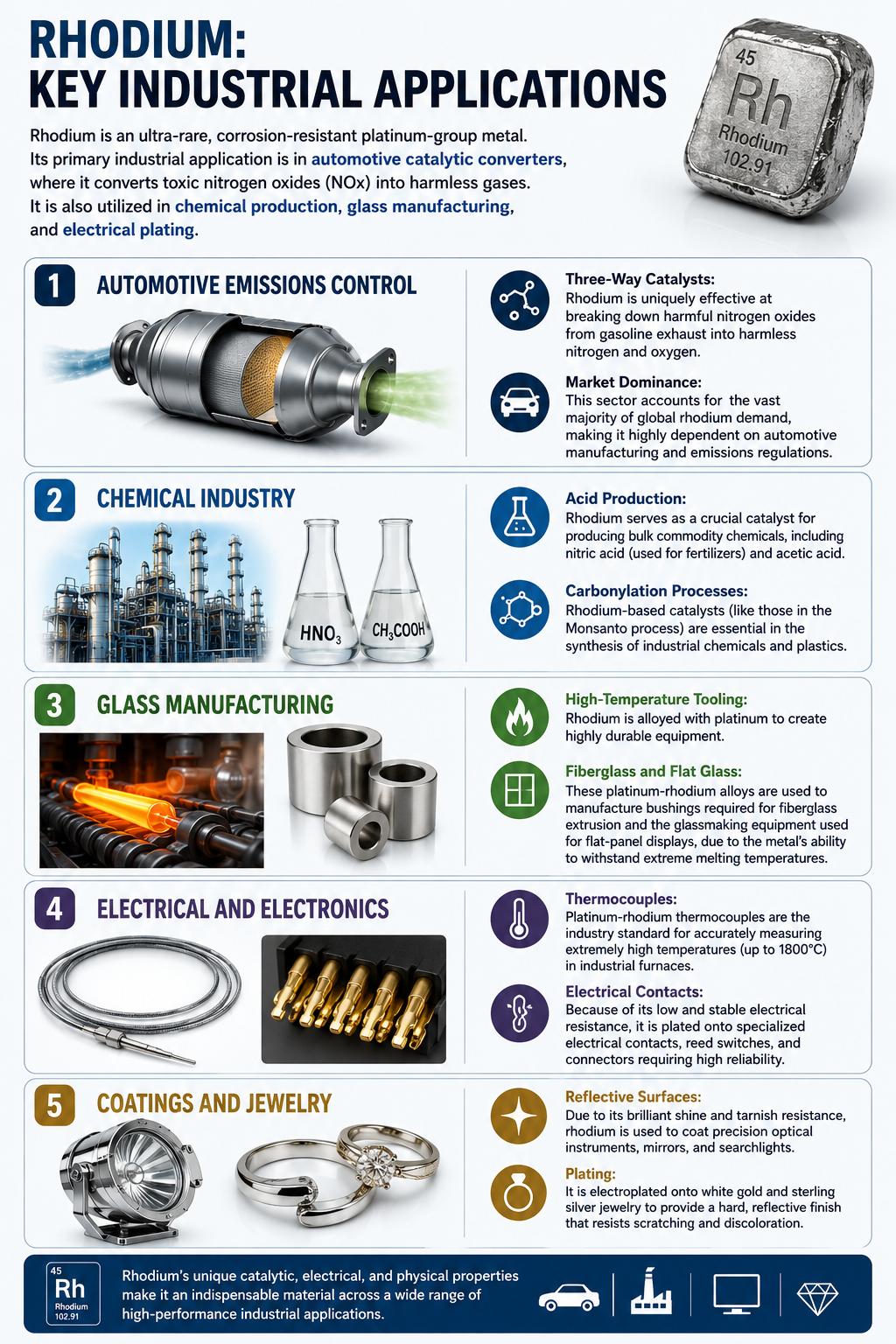
That became hugely important as governments across China, Europe and the US tightened environmental rules over the past decade, forcing automakers to use larger amounts of the metal in vehicles.
Suddenly, demand exploded.
A tiny market with enormous influence
One of the reasons Rhodium behaves so differently from Gold or Silver is that the market is astonishingly small.
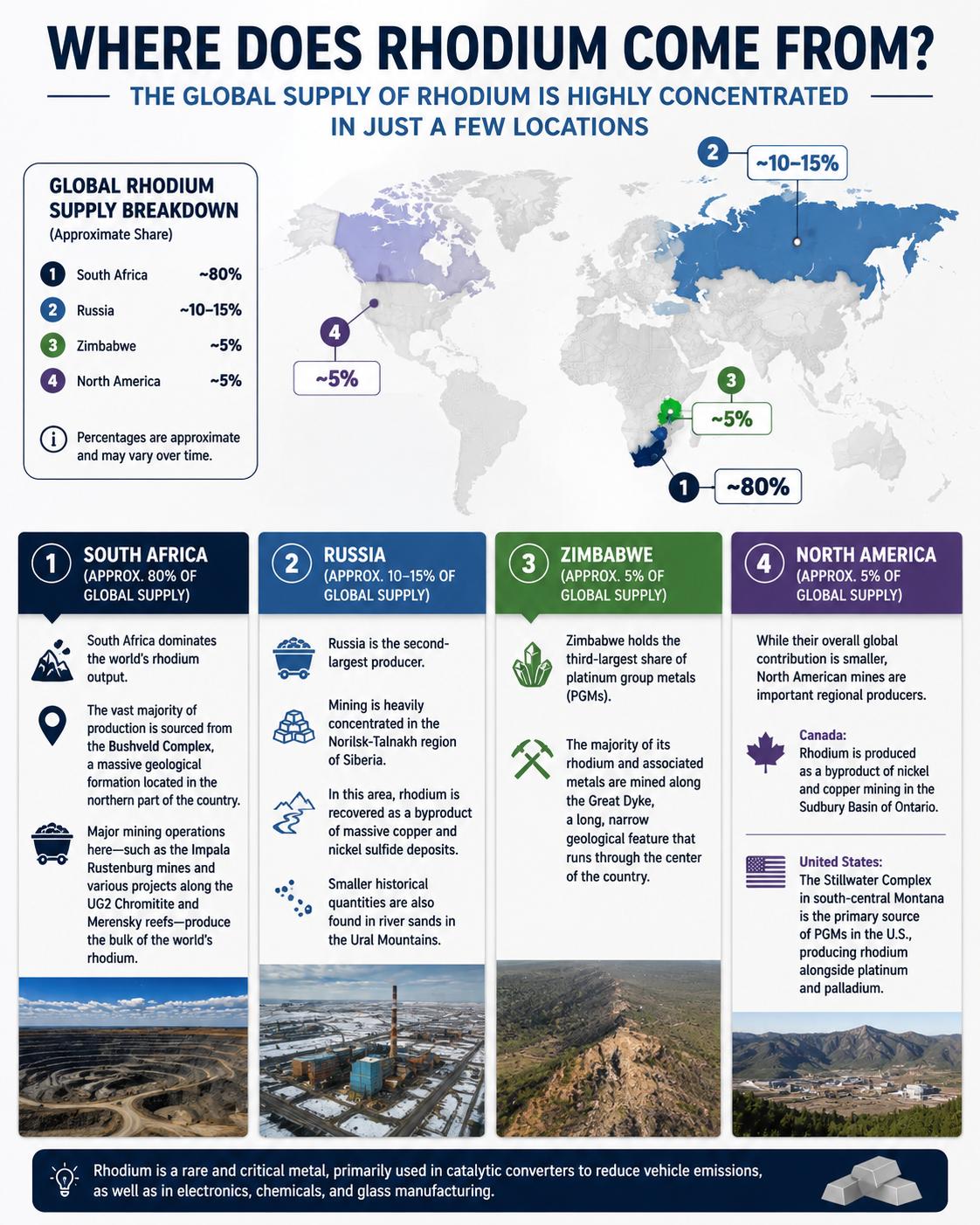
Most of the world’s supply comes from South Africa, particularly from the Bushveld Complex, one of the richest mining regions on Earth for Platinum group metals.
Smaller amounts are also produced in:
- Russia
- Zimbabwe
- Canada
- United States
But here is the crucial detail: Rhodium is rarely mined on its own. In most cases, it appears as a byproduct of Platinum and Nickel mining. That means miners cannot simply ramp up production when prices rise.
And that is where things get interesting.
A power shortage in South Africa, a refinery outage, labour unrest or even transport disruptions can suddenly tighten supply in a market that is already extremely thin.
Because the market is so small, it does not take much to send prices soaring.
Can you actually trade Rhodium?
In theory, yes.
In practice, Rhodium is one of the least accessible major commodities in the world.
Unlike Gold or Silver, Rhodium is not heavily traded on large futures exchanges by armies of investors and speculators every day. Most transactions happen quietly behind the scenes through specialist dealers, refiners and industrial contracts.
That is one reason the market can become so unstable.
There are Rhodium futures contracts and some exchange traded investment products linked to the metal, but liquidity is extremely limited compared with mainstream commodities like Oil, Gold or Copper.
In many cases, trading volumes are tiny.
Physical Rhodium can also be bought in bars or coins through specialist dealers, although the market remains highly niche and often comes with wide bid ask spreads and limited liquidity.
Because the market is so small, even relatively modest disruptions in supply or sudden shifts in industrial demand can trigger enormous price swings.
That helps explain why Rhodium has experienced some of the most dramatic boom and bust cycles in modern commodity history.
How Rhodium became more expensive than Gold
The perfect storm arrived after the pandemic: automakers needed more Rhodium to comply with stricter emissions standards just as global supply chains were falling apart. At the same time, mining disruptions in South Africa made supply even tighter.
The result was extraordinary: Rhodium prices exploded from below $1,000 an ounce only a few years earlier to almost $30,000 by 2021.
For comparison: Gold was trading near $1,700 at the time.
Rhodium currently trades at around $9,000, still way more expensive than Gold and Platinum, and is consolidating its position as one of the most expensive metals.
It was one of the most dramatic rallies seen in any commodity market in recent memory. And unlike Gold, which trades in a massive and highly liquid global market, Rhodium’s tiny size amplified every shock.
The problem now facing Rhodium
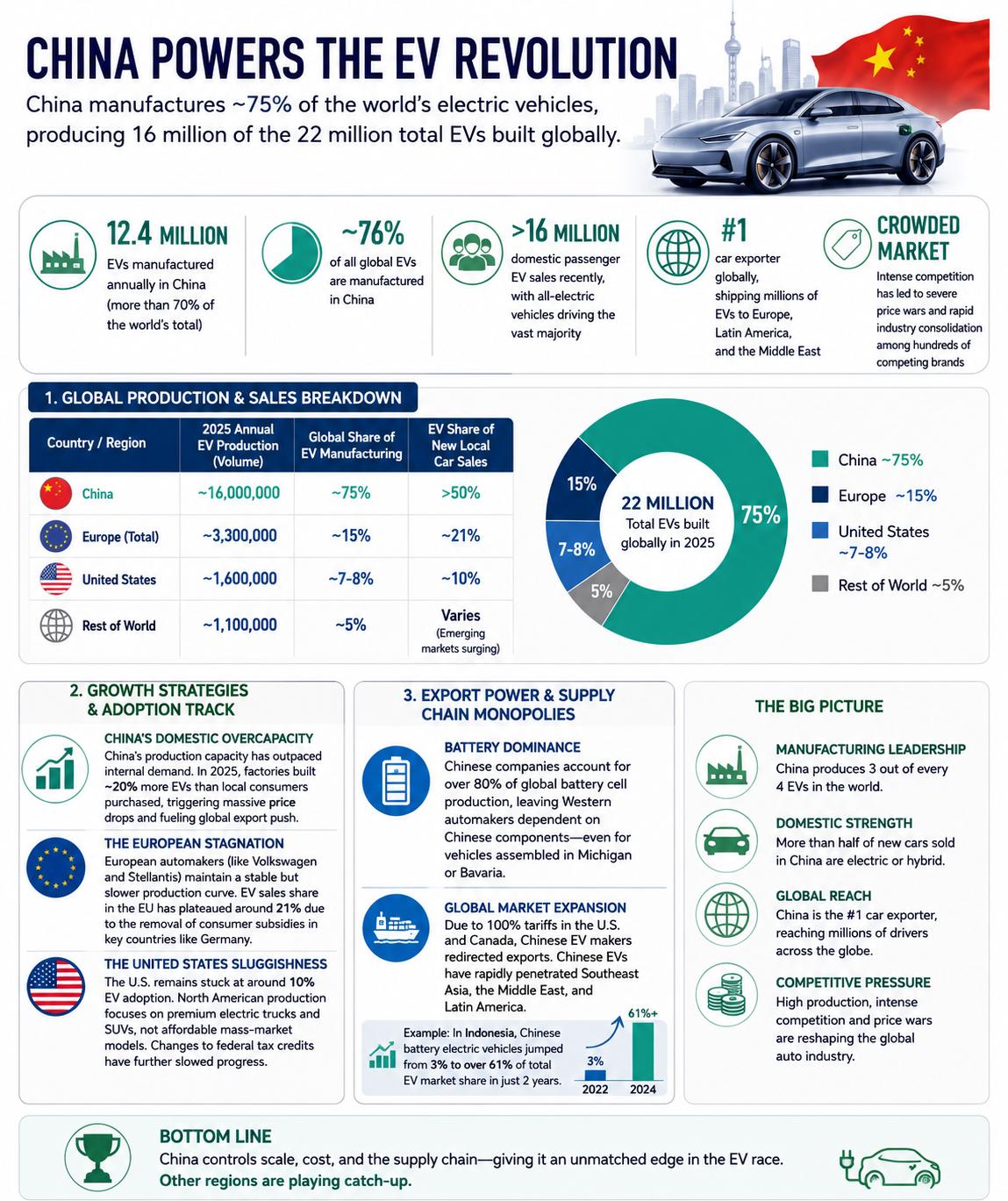
But the same metal that benefited from stricter environmental rules now faces a very different challenge: the rise of electric vehicles.
Battery electric cars do not need catalytic converters. No catalytic converter means no Rhodium. That has created a growing debate around the long-term future of the metal.
Some analysts believe demand could gradually shrink as EV adoption accelerates across the world. Others argue the decline may not be so straightforward.
Hybrid vehicles still require catalytic converters, while tighter emissions rules for traditional engines could continue increasing Rhodium demand in the years ahead.
That push and pull has turned Rhodium into one of the most volatile corners of the commodity world.
After reaching record highs in 2021, prices later collapsed as car production slowed, semiconductor shortages hit the auto sector and investors started focusing more aggressively on the EV transition.
A metal most people never hear about, until prices explode
Rhodium remains one of the clearest examples of how obscure industrial metals can suddenly become globally important. Behind the scenes, it sits at the intersection of:
- environmental regulation,
- geopolitics,
- mining supply chains,
- and the future of the global auto industry.
And perhaps that is the most remarkable part of the story.
In a world of energy transitions, supply shortages and geopolitical tensions, even a metal tucked away in car exhaust systems can become one of the most valuable commodities on Earth.
