

Dive Brief:
- Sen. Elizabeth Warren, D-MA, appeared to grow exasperated with Federal Reserve Gov. Michelle Bowman’s responses on how tariffs could harm financial stability and whether the nominee for Fed vice chair for supervision would push for stress testing to gauge the biggest banks’ readiness to withstand associated shocks.
- “Financial instability would amplify the harms of these irrational tariffs, and you want to just sit here and say, oh, it’s all good,” Warren said at Bowman’s nomination hearing Thursday before the Senate Banking Committee.
- Bowman told the committee Thursday that, if confirmed, she plans to “prioritize reforming and refocusing supervision, restoring regulatory tailoring, ensuring a viable path for innovation in the banking system, and promoting transparency and accountability.”
Dive Insight:
Warren said she’s “deeply concerned” about Bowman’s nomination, and pursuing deregulation amid economic turmoil caused by tariff volatility “would be especially dangerous,” Warren said.
“President [Donald] Trump is fanning the flames of disaster with his mismanagement of the nation’s economy,” Warren wrote a letter to Bowman. “And I am concerned that instead of showing up with the fire department, you will bring a can of gasoline.”
In her letter, Warren asked more than 100 questions seeking to suss out the Fed governor’s thoughts on supervision, regulation, enforcement, bank merger considerations, the Community Reinvestment Act and the Fed’s independence.
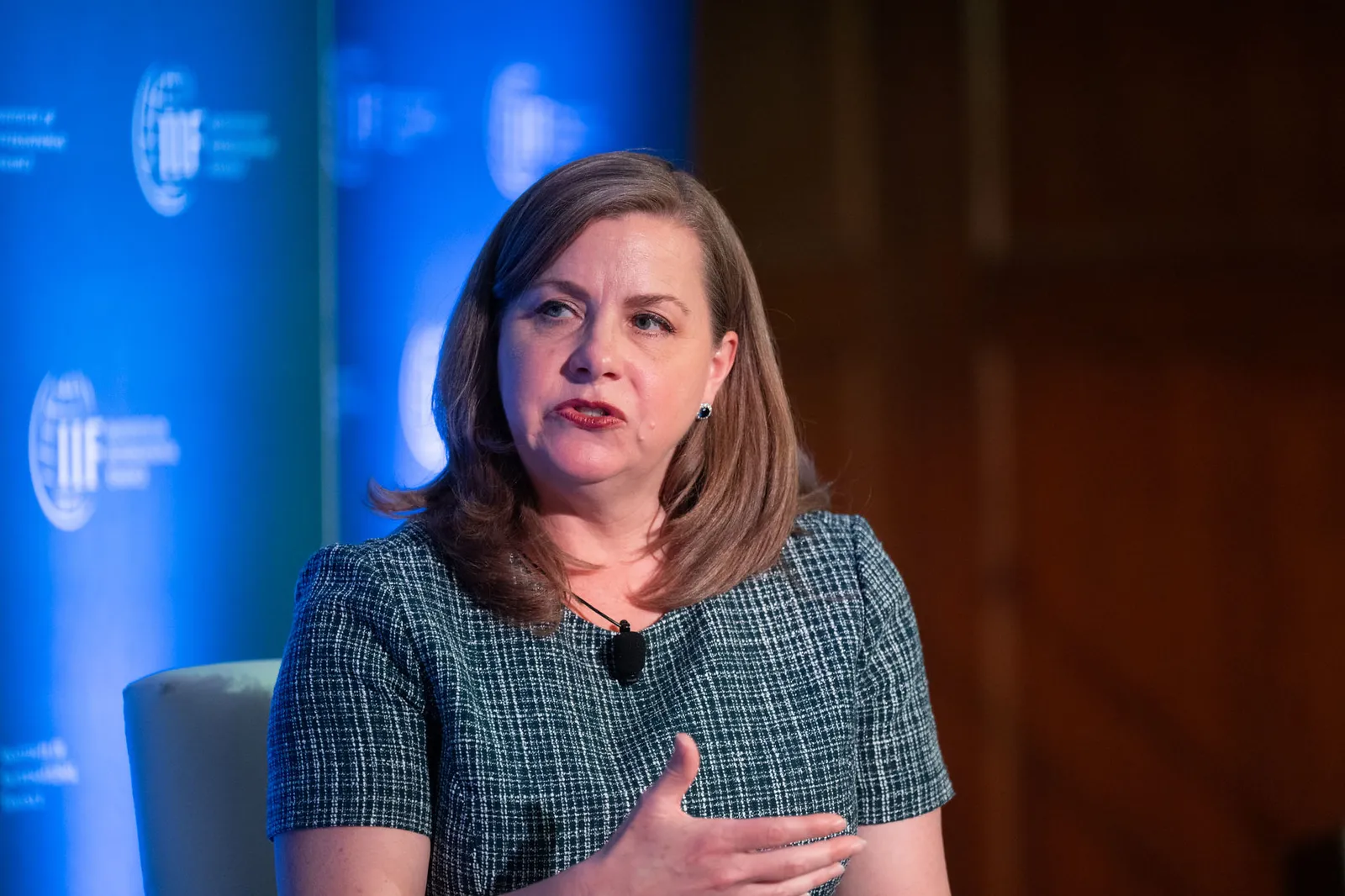
Michelle Bowman
During the hearing, Warren accused Bowman of spending her tenure at the Fed “prioritizing Wall Street over Main Street.”
Bowman would be “the No. 1 financial cop on the beat during an incredibly dangerous time,” Warren said. The senator noted Fed Chair Jerome Powell has said the Trump administration’s tariffs will lead to higher unemployment and higher inflation, and pressed for Bowman’s take on how the tariffs could threaten the stability of the financial system.
Bowman noted the economy is strong and unemployment remains low, before Warren cut her off and reiterated the question. “Could you just give me a straight answer on that?” Warren said.
“I think, as we were watching and waiting to see how the path for these policies continues to evolve, we’ll understand what the economic effects of those policies will be,” Bowman replied.
“So are you saying you don’t know? If the tariffs could have any effect on the financial system?” Warren replied incredulously.
“I think it’s unclear at this point, since we don’t know how the economic policies will be calibrated, and what their effects on the industries will be,” Bowman said.
Warren said tariffs “threaten to strangle the economy,” as the stock market has seen wild swings and treasury securities experience volatility. “And you don’t see any risks to the financial system? Nothing? You got nothing for me here?”
“Senator, what I would tell you is that we’re starting on a strong economic foundation,” Bowman said before Warren said she took that as a “nothing” answer and cut her off again.
Warren then questioned Bowman on whether she would seek to immediately conduct a stress test of the big banks, to probe whether they can endure a deep and prolonged recession triggered by a massive trade shock. Bowman indicated the Fed has a process for stress testing already underway, which will continue to move forward as planned.
“All of the things that have happened in the last week and in the last two months, you’re just going to cover your eyes and cover your ears and say, I’m sure the banks will be fine, we’ll check them out in several months?” Warren said.
“Senator Warren, we are always watching –” Bowman said.
“Always watching, but not running a stress test,” Warren shot back.
Sen. Thom Tillis, R-NC, pointed out that Michael Barr, the central bank’s previous vice chair for supervision, didn’t launch a stress test when Silicon Valley Bank failed, or when inflation soared.
Sen. Tim Scott, R-SC, the committee’s chair, said Bowman will bring accountability and transparency to the Fed, and “ensure it operates as an independent institution, void of politics.” Sen. Bernie Moreno, R-OH, indicated he was pleased to see a regulator who “represents Main Street” up for the role.
In her testimony before the committee, Bowman said supervision “must be reformed and refocused to better address core and material financial risks.”
She called out “significant shortcomings in supervision over the past few years” and said supervision “must be grounded in applicable law, and provide clear standards to regulated institutions. Supervisory expectations should not surprise regulated firms.”
On regulation, Bowman advocated for a pragmatic approach that ensures regulations are efficient and effective. That “requires identifying the problem targeted by the regulation, considering the costs and benefits of any proposed change, as well as incentive effects, impacts on markets, and potential unintended consequences,” she said.
Regulators should prioritize identifying and remediating issues “that may pose long-term structural problems to the banking system and the critical markets it supports, including addressing regulatory disincentives to Treasury market intermediation activities by banks and their affiliates,” she said.
Regulatory tailoring is key, she said, particularly for community and regional banks. Implementing Dodd-Frank regulations while she was a banker in Kansas was a “complex” and “difficult” process, Bowman said during the hearing.
Promoting innovation, too, is a top priority, she said. “To remain viable and competitive, banks must be able to consider new technologies that can improve products and services, and lower costs,” she said. “Regulators should adopt an approach that encourages and promotes sensible innovation.”
Bowman has served on the Fed board since 2018. Before that, she served as Kansas’ state bank commissioner for nearly two years, and was vice president of Farmers & Drovers Bank in Kansas from 2010 to 2017.
